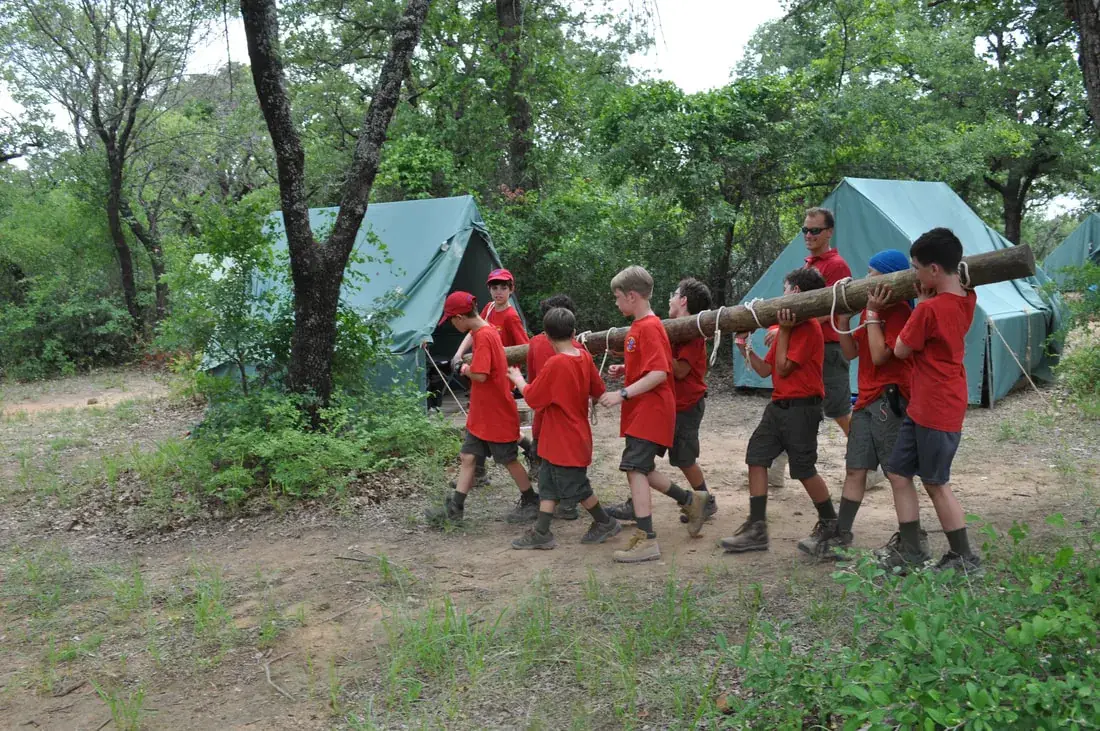
First Class Emphasis
FCE Schedule
Explore the troop’s published Tenderfoot, Second Class, and First Class reference. Search by skill, filter by rank or role, and sort the requirements to find your next area of focus.
The published troop reference
First Class Emphasis Requirements
Find the skill you want to work on, see the published teaching and approval roles, and explore the path from Tenderfoot to First Class.
| Tenderfoot | 1a | Present yourself to your leader, prepared for an overnight camping trip. Show the personal and camping gear you will use. Show the right way to pack and carry it. (Pages 267-273)) | Patrol Leader | Patrol Leader |
|---|---|---|---|---|
| Tenderfoot | 1b | Spend at least one night on a patrol or troop campout. Sleep in a tent you have helped pack. | Patrol Leader | Patrol Leader |
| Tenderfoot | 1c | Tell how you practiced the Outdoor Code on a campout or outing. (Pages 222-224) | Patrol Leader | Patrol Leader |
| Tenderfoot | 2a | On the campout, assist in preparing one of the meals. Tell why it is important for each patrol member to share in meal preparation and cleanup. (Pages 304-305, 325) | Patrol Leader | Patrol Leader |
| Tenderfoot | 2b | While on a campout, demonstrate the appropriate method of safely cleaning items used to prepare, serve, and eat a meal. (Pages 307-309) | Patrol Leader | Patrol Leader |
| Tenderfoot | 2c | Explain the importance of eating together as a patrol. (Page 325) | Patrol Leader | Patrol Leader |
| Tenderfoot | 3a | Demonstrate the use of the square knot. (Page 365) | Assistant Scoutmaster | Assistant Scoutmaster |
| Tenderfoot | 3b | Demonstrate a practical use of two half-hitches. (Page 366) | Assistant Scoutmaster | Assistant Scoutmaster |
| Tenderfoot | 3c | Demonstrate a practical use of the taut-line hitch. (Page 367) | Assistant Scoutmaster | Assistant Scoutmaster |
| Tenderfoot | 3d | Demonstrate proper care, sharpening, and use of the knife, saw, and ax. Describe when each should be used. (Page 378-387) | Assistant Scoutmaster | Assistant Scoutmaster |
| Tenderfoot | 4a | Show First aid for the following: Simple cuts, blisters on hand and foot, minor burns and scalds, bites or stings of insects and ticks, venomous snakebite, nosebleet, frostbite and sunburn, and choking | Assistant Scoutmaster | Assistant Scoutmaster |
| Tenderfoot | 4b | Describe common poisonous or hazardous plants; identify any that grow in your local area or campsite location. Tell how to treat for exposure to them. (Pages 127,191-192) | Confirm with troop leadership | Confirm with troop leadershipPersonal assignment omitted |
| Tenderfoot | 4c | Tell what you can do while on a campout or other outdoor activity to prevent or reduce the occurrence of injuries or exposure listed in Tenderfoot requirements 4a and 4b. | Assistant Scoutmaster | Assistant Scoutmaster |
| Tenderfoot | 4d | Assemble a personal first-aid kit to carry with you on future campouts and hikes. Tell how each item in the kit would be used. (Pages 108-109) | Assistant Scoutmaster | Assistant Scoutmaster |
| Tenderfoot | 5a | Explain the importance of the buddy system as it relates to your personal safety on outings and in your neighborhood. Use the buddy system while on a troop or patrol outing. (Pages 29, 252, 404) | Patrol Leader | Patrol Leader |
| Tenderfoot | 5b | Describe what to do if you become lost on a hike or campout. (Pages 254-255) | Patrol Leader | Patrol Leader |
| Tenderfoot | 5c | Explain the rules of safe hiking, both on the highway and cross-country, during the day and at night. (Pages 252-253) | Patrol Leader | Patrol Leader |
| Tenderfoot | 6a | Record your best in the following tests: puhsups, situps or curl-ups, back-saver sit-and-reach, 1-mile walk/run | Assistant Scoutmaster | Scout |
| Tenderfoot | 6b | Describe what to do if you become lost on a hike or campout. (Pages 254-255) | Assistant Scoutmaster | Assistant Scoutmaster |
| Tenderfoot | 6c | Show improvement (of any degree) in each activity listed in Tenderfoot requirement 6a after practicing for 30 days. | Assistant Scoutmaster | Scout |
| Tenderfoot | 7a | Demonstrate how to display, raise, lower and fold the U.S. flag. (Pages 56-61) | Assistant Scoutmaster | Assistant Scoutmaster |
| Tenderfoot | 7b | Participate in a total of one hour of service in one or more service projects approved by your Scoutmaster. Explain how your service to others relates to the Scout slogan and Scout motto. (Pages 68-69) | Assistant Scoutmaster | Scout |
| Tenderfoot | 8 | Describe the steps in Scouting’s Teaching EDGE method. Use the Teaching EDGE method to teach another person how to tie the square knot. (Pages 38-39, 42, 365) | Patrol Leader | Not specified |
| Tenderfoot | 9 | Demonstrate Scout spirit by living the Scout Oath and Scout Law. Tell how you have done your duty to God and how you have lived four different points of the Scout Law in your everyday life. | Assistant Scoutmaster | Scout |
| Tenderfoot | 10 | While working toward the Tenderfoot rank, and after completing Scout rank requirement 7, participate in a Scoutmaster Conference. | Assistant Scoutmaster | Scout |
| Tenderfoot | 11 | Successfully complete your board of review for the Tenderfoot rank | Board of Review | Scout |
| Second Class | 1a | Since joining, participate in five separate troop/patrol activities, three of which include overnight camping. These five activities do not include troop or patrol meetings. On at least two of the three campouts, spend the night in a tent that you pitch or other structure that you help erect (such as a lean-to, snow cave (not in Houston!), or tepee). | Patrol Leader | Not specified |
| Second Class | 1b | Explain the principals of Leave No Trace and tell how you practiced them on a campout or outing. This outing must be different from the one used for Tenderfoot requirement 1c. (Pages 224-233) | Assistant Scoutmaster | Assistant Scoutmaster |
| Second Class | 1c | On one of these campouts, select a location for your patrol site and recommend it to your patrol leader, senior patrol leader, or troop guide. Explain what factors you should consider when choosing a patrol site and where to pitch a tent. (Pages 265-267) | Patrol Leader | Patrol Leader |
| Second Class | 2a | Explain when it is appropriate to use a fire for cooking or other purposes and when it would not be appropriate to do so. (Pages 303-304) | Patrol Leader | Patrol Leader |
| Second Class | 2b | Use the tools listed in Tenderfoot requirement 3d to prepare tinder, kindling, and fuel wood for a cooking fire. (Pages 387-392) | Patrol Leader | Patrol Leader |
| Second Class | 2c | At an approved outdoor location and time, use the tinder, kindling, and fuel wood from Second Class requirement 2b to demonstrate how to build a fire. Unless prohibited by local fire restrictions, light the fire. After allowing the flames to burn safely for at least two minutes, safely extinguish the flames with minimal impact to the fire site. (Pages 387-392) | Patrol Leader | Patrol Leader |
| Second Class | 2d | Explain when it is appropriate to use a lightweight stove and when it is appropriate to use a propane stove. Set up a lightweight stove or propane stove. Light the stove, unless prohibited by local fire restrictions. Describe the safety procedures for using these types of stoves. (Pages 392-393) | Assistant Scoutmaster | Assistant Scoutmaster |
| Second Class | 2e | On one campout, plan and cook one hot breakfast or lunch, selecting foods from MyPlate or the current USDA nutritional model. Explain the importance of good nutrition. Demonstrate how to transport, store, and prepare the foods you selected. (Pages 290-325) | Assistant Scoutmaster | Assistant ScoutmasterPersonal assignment omitted |
| Second Class | 2f | Demonstrate tying the sheet bend knot. Describe a situation in which you would use this knot. (Page 370) | Assistant Scoutmaster | Assistant Scoutmaster |
| Second Class | 2g | Demonstrate tying the bowline knot. Describe a situation in which you would use this knot. (Pages 369-370) | Assistant Scoutmaster | Assistant Scoutmaster |
| Second Class | 3a | Demonstrate how a compass works and how to orient a map. Use a map to point out and tell the meaning of five map symbols. (Pages 334, 338-339) | Assistant Scoutmaster | Assistant Scoutmaster |
| Second Class | 3b | Using a compass and map together, take a 5-mile hike (or 10 miles by bike) approved by your adult leader and your parent or guardian. | Confirm with troop leadership | Confirm with troop leadershipPersonal assignment omitted |
| Second Class | 3c | Describe some hazards or injuries that you might encounter on your hike and what you can do to help prevent them. (Pages 250-255) | Assistant Scoutmaster | Assistant Scoutmaster |
| Second Class | 3d | Demonstrate how to find directions during the day and at night without using a compass or an electronic device. (Pages 354-357) | Assistant Scoutmaster | Assistant Scoutmaster |
| Second Class | 4 | Identify or show evidence of at least 10 kinds of wild animals (such as birds, mammals, reptiles, fish, or mollusks) found in your local area or camping location. You may show evidence by tracks, signs, or photographs you have taken. (Pages 199-212) | Assistant Scoutmaster | Confirm with troop leadershipPersonal assignment omitted |
| Second Class | 5a | Tell what precautions must be taken for a safe swim. (Pages 158-161) | Confirm with troop leadership | Confirm with troop leadershipPersonal assignment omitted |
| Second Class | 5b | Demonstrate your ability to pass the BSA beginner test: Jump feetfirst into water over your head in depth, level off and swim 25 feet on the surface, stop, turn sharply, resume swimming, then return to your starting place. (Page 168) | Confirm with troop leadership | Confirm with troop leadershipPersonal assignment omitted |
| Second Class | 5c | Demonstrate water rescue methods by reaching with your arm or leg, by reaching with a suitable object, and by throwing lines and objects. (Pages 177-179) | Confirm with troop leadership | Confirm with troop leadershipPersonal assignment omitted |
| Second Class | 5d | Explain why swimming rescues should not be attempted when a reaching or throwing rescue is possible. Explain why and how a rescue swimmer should avoid contact with the victim. (Page 181) | Confirm with troop leadership | Confirm with troop leadershipPersonal assignment omitted |
| Second Class | 6a | Demonstrate first aid for the following: object in the eye; bite of a warm-bloodeded animal; puncture wounds from a s[linter, nail and fishook; serious burns(2nd degree),; heat exhaustion,; shock; heatstroke, dehydration, hypothermia, and hyperventilation. | Assistant Scoutmaster | Assistant Scoutmaster |
| Second Class | 6b | Show what to do for “hurry” cases of stopped breathing (Pages 116-118), stroke (Page 124), severe bleeding (Pages 119-120), and ingested poisoning (Pages 119-120). | Assistant Scoutmaster | Assistant Scoutmaster |
| Second Class | 6c | Tell what you can do while on a campout or hike to prevent or reduce the occurrence of the injuries listed in Second Class requirements 6a and 6b. (Pages 282-287) | Assistant Scoutmaster | Assistant Scoutmaster |
| Second Class | 6d | Explain what to do in case of accidents that require emergency response in the home and backcountry. Explain what constitutes an emergency and what information you will need to provide to a responder. (Pages 151-152) | Assistant Scoutmaster | Assistant Scoutmaster |
| Second Class | 6e | Tell how you should respond if you come upon the scene of a vehicular accident. (Page 152) | Assistant Scoutmaster | Assistant Scoutmaster |
| Second Class | 7a | After completing Tenderfoot requirement 6c, be physically active at least 30 minutes each day for five days a week for four weeks. Keep track of your activities. (Page 74) | Assistant Scoutmaster | Scout |
| Second Class | 7b | Share your challenges and successes in completing Second Class requirement 7a. Set a goal for continuing to include physical activity as part of your daily life and develop a plan for doing so. | Assistant Scoutmaster | Scout |
| Second Class | 7c | Participate in a school, community, or troop program on the dangers of using drugs, alcohol, and tobacco and other practices that could be harmful to your health. Discuss your participation in the program with your family, and explain the dangers of substance addictions. Report to your Scoutmaster or other adult leader in your troop about which parts of the Scout Oath and Scout Law relate to what you learned. (Pages 94-98) | Assistant Scoutmaster | Scout |
| Second Class | 8a | Participate in a flag ceremony for your school, religious institution, chartered organization, community, or Scouting activity (Pages 60-61) | Assistant Scoutmaster | Assistant Scoutmaster |
| Second Class | 8b | Explain what respect is due the flag of the United States. (Pages 56-62) | Patrol Leader | Patrol Leader |
| Second Class | 8c | With your parents or guardian, decide on an amount of money that you would like to earn, based on the cost of a specific item you would like to purchase. Develop a written plan to earn the amount agreed upon and follow that plan; it is acceptable to make changes to your plan along the way. Discuss any changes made to your original plan and whether you met your goal. | Assistant Scoutmaster | Scout / parent |
| Second Class | 8d | At a minimum of three locations, compare the cost of the item for which you are saving to determine the best place to purchase it. After completing Second Class requirement 8c, decide if you will use the amount that you earned as originally intended, save all or part of it, or use it for another purpose. | Assistant Scoutmaster | Scout / parent |
| Second Class | 8e | Participate in two hours of service through one or more service projects approved by your Scoutmaster. Tell how your service to others relates to the Scout Oath. (Pages 68-69) | Assistant Scoutmaster | Scout / parent |
| Second Class | 9a | Explain the three R’s of personal safety and protection. (Page 400) | Assistant Scoutmaster | Assistant Scoutmaster |
| Second Class | 9b | Describe bullying; tell what the appropriate response is to someone who is bullying you or another person. (Pages 405-406) | Assistant Scoutmaster | Assistant Scoutmaster |
| Second Class | 10 | Demonstrate Scout spirit by living the Scout Oath and Scout Law. Tell how you have done your duty to God and how you have lived four different points of the Scout Law (not to include those used for Tenderfoot requirement 9) in your everyday life. | Assistant Scoutmaster | Scout |
| Second Class | 11 | While working toward the Second Class rank, and after completing Tenderfoot requirement 10, participate in a Scoutmaster Conference. | Assistant Scoutmaster | Scout |
| Second Class | 12 | Complete your Board of Review | Board of Review | Scout |
| First Class | 1a | Since joining, participate in 10 separate troop/patrol activities, six of which include overnight camping. These 10 activities do not include troop or patrol meetings. On at least five of the six campouts, spend the night in a tent that you pitch or other structure that you help erect (such as a lean-to, snow cave, or tepee). | Assistant Scoutmaster | Not applicable (source) |
| First Class | 1b | Explain each of the principles of Tread Lightly! and tell how you practiced them on a campout or outing. This outing must be different from the ones used for Tenderfoot requirement 1c and Second Class requirement 1b. (Pages 233-234) | Patrol Leader | Patrol Leader |
| First Class | 2a | Help plan a menu for one of the above campouts that includes at least one breakfast, one lunch, and one dinner, and that requires cooking at least two of the meals. Tell how the menu includes the foods from MyPlate or the current USDA nutritional model and how it meets nutritional needs for the planned activity or campout. (Pages 290—294) | Assistant Scoutmaster | Assistant ScoutmasterPersonal assignment omitted |
| First Class | 2b | Using the menu planned in First Class requirement 2a, make a list showing a budget and the food amounts needed to feed three or more boys. Secure the ingredients. (Pages 296-299) | Assistant Scoutmaster | Assistant Scoutmaster |
| First Class | 2c | Show which pans, utensils, and other gear will be needed to cook and serve these meals. (Pages 302-303) | Assistant Scoutmaster | Assistant Scoutmaster |
| First Class | 2d | Demonstrate the procedures to follow in the safe handling and storage of fresh meats, dairy products, eggs, vegetables, and other perishable food products. Show how to properly dispose of camp garbage, cans, plastic containers, and other rubbish. (Pages 307-309) | Assistant Scoutmaster | Assistant Scoutmaster |
| First Class | 2e | On one campout, serve as cook. Supervise your assistant(s) in using a stove or building a cooking fire. Prepare the breakfast, lunch, and dinner planned in First Class requirement 2a. Supervise the cleanup. | Confirm with troop leadership | Confirm with troop leadershipPersonal assignment omitted |
| First Class | 3a | Discuss when you should and should not use lashings. (Pages 371-378) | Assistant Scoutmaster | Assistant Scoutmaster |
| First Class | 3b | Demonstrate tying the timber hitch and clove hitch. (Pages 367-368) | Assistant Scoutmaster | Assistant Scoutmaster |
| First Class | 3c | Demonstrate tying the square, shear, and diagonal lashings by joining two or more poles together. (Pages 371-378) | Assistant Scoutmaster | Assistant Scoutmaster |
| First Class | 3d | Use lashings to make a useful camp gadget or structure. | Assistant Scoutmaster | Assistant Scoutmaster |
| First Class | 4a | Using a map and compass, complete an orienteering course that covers at least one mile and requires measuring the height and/or width of designated items (tree, tower, canyon, ditch, etc.). (Pages 350-351) | Assistant Scoutmaster | Assistant Scoutmaster |
| First Class | 4b | Demonstrate how to use a handheld GPS unit, GPS app on a smartphone, or other electronic navigation system. Use GPS to find your current location, a destination of your choice, and the route you will take to get there. Follow that route to arrive at your destination. (Pages 345-349) | Assistant Scoutmaster | Assistant Scoutmaster |
| First Class | 5a | Identify or show evidence of at least 10 kinds of native plants found in your local area or campsite location. You may show evidence by identifying fallen leaves or fallen fruit that you find in the field, or as part of a collection you have made, or by photographs you have taken. (Pages 188-199) | Confirm with troop leadership | Confirm with troop leadershipPersonal assignment omitted |
| First Class | 5b | Identify two ways to obtain a weather forecast for an upcoming activity. Explain why weather forecasts are important when planning for an event. (Page 212) | Patrol Leader | Patrol Leader |
| First Class | 5c | Describe at least three natural indicators of impending hazardous weather, the potential dangerous events that might result from such weather conditions, and the appropriate actions to take. (Page 217) | Patrol Leader | Patrol Leader |
| First Class | 5d | Describe extreme weather conditions you might encounter in the outdoors in your local geographic area. Discuss how you would determine ahead of time the potential risk of these types of weather dangers, alternative planning considerations to avoid such risks, and how you would prepare for and respond to those weather conditions. (Pages 215-216) | Patrol Leader | Patrol Leader |
| First Class | 6a | Successfully complete the BSA swimmer test. (Pages 168-170) | Confirm with troop leadership | Confirm with troop leadershipPersonal assignment omitted |
| First Class | 6b | Tell what precautions must be taken for a safe trip afloat. (Pages 172-173) | Confirm with troop leadership | Confirm with troop leadershipPersonal assignment omitted |
| First Class | 6c | Identify the basic parts of a canoe, kayak, or other boat. Identify the parts of a paddle or an oar. (Pages 174-175) | Assistant Scoutmaster | Assistant Scoutmaster |
| First Class | 6d | Describe proper body positioning in a watercraft, depending on the type and size of the vessel. Explain the importance of proper body position in the boat. (Page 176) | Confirm with troop leadership | Confirm with troop leadershipPersonal assignment omitted |
| First Class | 6e | With a helper and a practice victim, show a line rescue both as tender and as rescuer. (The practice victim should be approximately 30 feet from shore in deep water.) (Pages 177-181) | Confirm with troop leadership | Confirm with troop leadershipPersonal assignment omitted |
| First Class | 7a | Demonstrate bandages for a sprained ankle and for injuries on the head, the upper arm, and the collarbone. (Pages 142-148) | Assistant Scoutmaster | Assistant Scoutmaster |
| First Class | 7b | By yourself and with a partner, show how to: · Transport a person from a smoke-filled room. · Transport for at least 25 yards a person with a sprained ankle. (Page 149-150) | Assistant Scoutmaster | Assistant Scoutmaster |
| First Class | 7c | Tell the five most common signals of a heart attack. Explain the steps (procedures) in cardiopulmonary resuscitation (CPR). (Pages 116-118) | Assistant Scoutmaster | Assistant Scoutmaster |
| First Class | 7d | Tell what utility services exist in your home or meeting place. Describe potential hazards associated with these utilities and tell how to respond in emergency situations. (Pages 154-155) | Assistant Scoutmaster | Assistant Scoutmaster |
| First Class | 7f | Develop an emergency action plan for your home that includes what to do in case of fire, storm, power outage, and water outage. (Pages 153-154) | Assistant Scoutmaster | Assistant Scoutmaster |
| First Class | 8a | After completing Second Class requirement 7a, be physically active at least 30 minutes each day for five days a week for four weeks. Keep track of your activities. | Assistant Scoutmaster | Scout |
| First Class | 8b | Share your challenges and successes in completing First Class requirement 8a. Set a goal for continuing to include physical activity as part of your daily life. | Assistant Scoutmaster | Scout |
| First Class | 9a | Visit and discuss with a selected individual approved by your leader (for example, an elected official, judge, attorney, civil servant, principal, or teacher) the constitutional rights and obligations of a U.S. citizen. (Pages 66-67) | Assistant Scoutmaster | To be determined |
| First Class | 9b | Investigate an environmental issue affecting your community. Share what you learned about that issue with your patrol or troop. Tell what, if anything, could be done by you or your community to address the concern. (Pages 55-56) | Assistant Scoutmaster | Scout / parent |
| First Class | 9c | On a Scouting or family outing, take note of the trash and garbage you produce. Before your next similar outing, decide how you can reduce, recycle, or repurpose what you take on that outing, and then put those plans into action. Compare your results. (Pages 55-56) | Assistant Scoutmaster | Scout |
| First Class | 9d | Participate in three hours of service through one or more service projects approved by your Scoutmaster. The project(s) must not be the same service project(s) used for Tenderfoot requirement 7b and Second Class requirement 8e. Explain how your service to others relates to the Scout Law. (Pages 68-69) | Assistant Scoutmaster | Scout |
| First Class | 10 | Tell someone who is eligible to join Boy Scouts, or an inactive Boy Scout, about your Scouting activities. Invite him to an outing, activity, service project, or meeting. Tell him how to join, or encourage the inactive Boy Scout to become active. Share your efforts with your Scoutmaster or other adult leader. (Page 32) | Assistant Scoutmaster | Scout |
| First Class | 11 | Demonstrate Scout spirit by living the Scout Oath and Scout Law. Tell how you have done your duty to God and how you have lived four different points of the Scout Law (different from those used for the previous ranks) in your everyday life. | Assistant Scoutmaster | Scout |
| First Class | 12 | Participate in a Scoutmaster Conference | Assistant Scoutmaster | Scout |
| First Class | 13 | Complete your Board of Review | Board of Review | Scout |
Source notes, role key, and privacy
PL = Patrol Leader; ASM = Assistant Scoutmaster; BOR = Board of Review. Blank source cells are shown as “Not specified”; N/A and TBD retain the source’s meaning. Named assignments are omitted; ask troop leadership who currently teaches or approves a requirement.
The source repeats the Tenderfoot 5b description at 6b and skips from First Class 7d to 7f. Those source limitations are preserved, not silently corrected. A handbook page number may refer to an older edition.
Seasonal topic overview · dates announced each semester
To Be Announced Each Semester
Fall Term — September through November: September: Hiking and Camping. October: Knots and FCE First Aid Night. November: Citizenship and Orienteering.
Spring Term — January through May: January: Camping. February: Knots. March: Citizenship. April: Cooking. May: Orienteering and FCE First Aid Night.
These are the published topic groupings, not confirmed dates for the current term. Check the troop calendar and current troop announcements before attending a session.